 |
Online Maps v3
|
|
Online Maps v3
|
Request parameters for Reverse Geocoding. More...
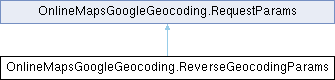
Public Member Functions | |
| ReverseGeocodingParams (double longitude, double latitude) | |
| Constructor. | |
| ReverseGeocodingParams (Vector2 location) | |
| Constructor. | |
| ReverseGeocodingParams (string placeId) | |
| Constructor. | |
Public Attributes | |
| double? | longitude |
| The longitude value specifying the location for which you wish to obtain the closest, human-readable address. | |
| double? | latitude |
| The latitude value specifying the location for which you wish to obtain the closest, human-readable address. | |
| string | placeId |
| The place ID of the place for which you wish to obtain the human-readable address. The place ID is a unique identifier that can be used with other Google APIs. For example, you can use the placeID returned by the Google Maps Roads API to get the address for a snapped point. For more information about place IDs, see the place ID overview. The place ID may only be specified if the request includes an API key or a Google Maps APIs Premium Plan client ID. | |
| string | result_type |
| One or more address types, separated by a pipe (|). Examples of address types: country, street_address, postal_code. For a full list of allowable values, see the address types on this page: https://developers.google.com/maps/documentation/geocoding/intro?hl=en#Types Specifying a type will restrict the results to this type. If multiple types are specified, the API will return all addresses that match any of the types. Note: This parameter is available only for requests that include an API key or a client ID. | |
| string | location_type |
| One or more location types, separated by a pipe (|). https://developers.google.com/maps/documentation/geocoding/intro?hl=en#ReverseGeocoding Specifying a type will restrict the results to this type. If multiple types are specified, the API will return all addresses that match any of the types. Note: This parameter is available only for requests that include an API key or a client ID. | |
 Public Attributes inherited from OnlineMapsGoogleGeocoding.RequestParams Public Attributes inherited from OnlineMapsGoogleGeocoding.RequestParams | |
| string | key |
| Your application's API key. This key identifies your application for purposes of quota management. | |
| string | language |
| The language in which to return results. List of supported languages: https://developers.google.com/maps/faq#languagesupport. | |
| string | client |
| Available to Google Maps APIs Premium Plan customers but not to holders of a previous Maps API for Business license. | |
| string | signature |
| Uses instead of an API key to authenticate requests. | |
Properties | |
| Vector2? | location [get, set] |
| The longitude and latitude values specifying the location for which you wish to obtain the closest, human-readable address. | |
Request parameters for Reverse Geocoding.
| OnlineMapsGoogleGeocoding.ReverseGeocodingParams.ReverseGeocodingParams | ( | double | longitude, |
| double | latitude ) |
Constructor.
| longitude | The longitude value specifying the location for which you wish to obtain the closest, human-readable address. |
| latitude | The latitude value specifying the location for which you wish to obtain the closest, human-readable address. |
| OnlineMapsGoogleGeocoding.ReverseGeocodingParams.ReverseGeocodingParams | ( | Vector2 | location | ) |
Constructor.
| location | The longitude and latitude values specifying the location for which you wish to obtain the closest, human-readable address. |
| OnlineMapsGoogleGeocoding.ReverseGeocodingParams.ReverseGeocodingParams | ( | string | placeId | ) |
Constructor.
| placeId | The place ID of the place for which you wish to obtain the human-readable address. The place ID is a unique identifier that can be used with other Google APIs. For example, you can use the placeID returned by the Google Maps Roads API to get the address for a snapped point. For more information about place IDs, see the place ID overview. The place ID may only be specified if the request includes an API key or a Google Maps APIs Premium Plan client ID. |