




Mesh to Terrain is a tool for easily and quickly converting a 3D terrain model created in 3ds Max, Terragen or any other editor to Unity Terrains.
Mesh to Terrain can convert textures to SplatPrototypes (Terrain Layers), generate terrain from several models and split the model into several terrains.
Mesh to Terrain can convert textures to SplatPrototypes (Terrain Layers), generate terrain from several models and split the model into several terrains.
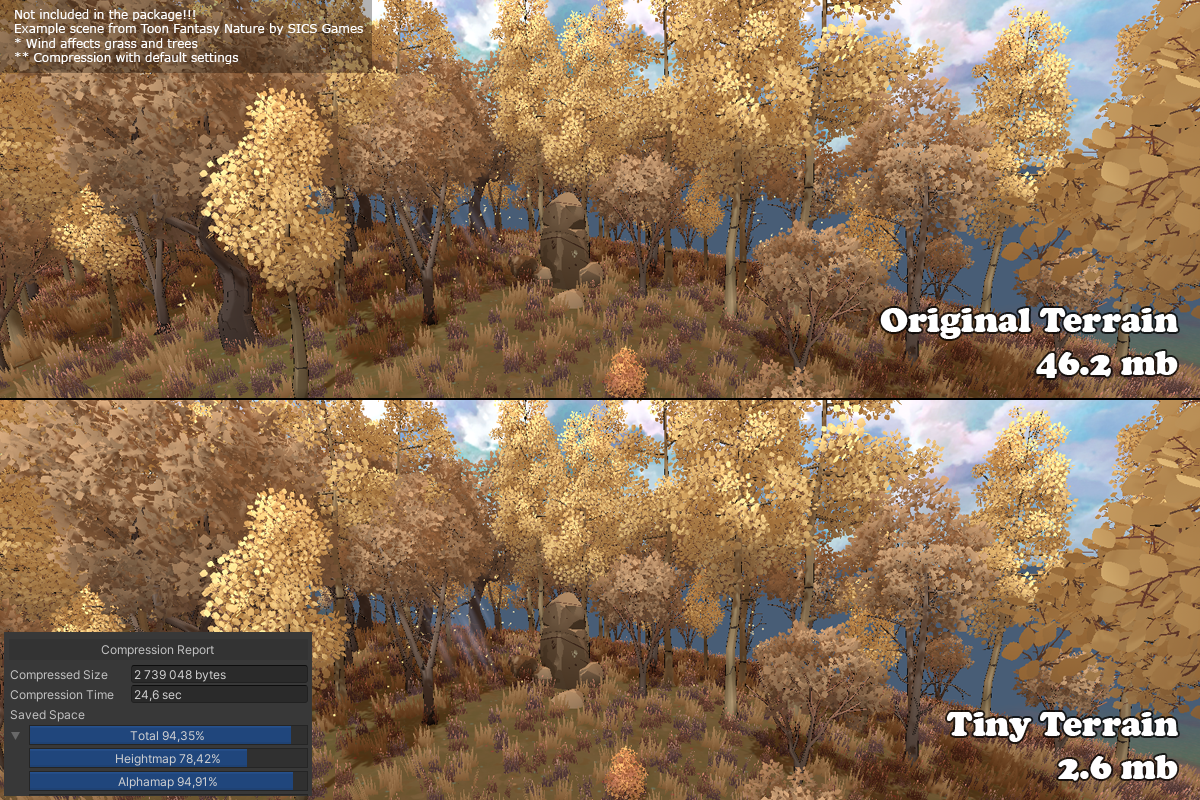
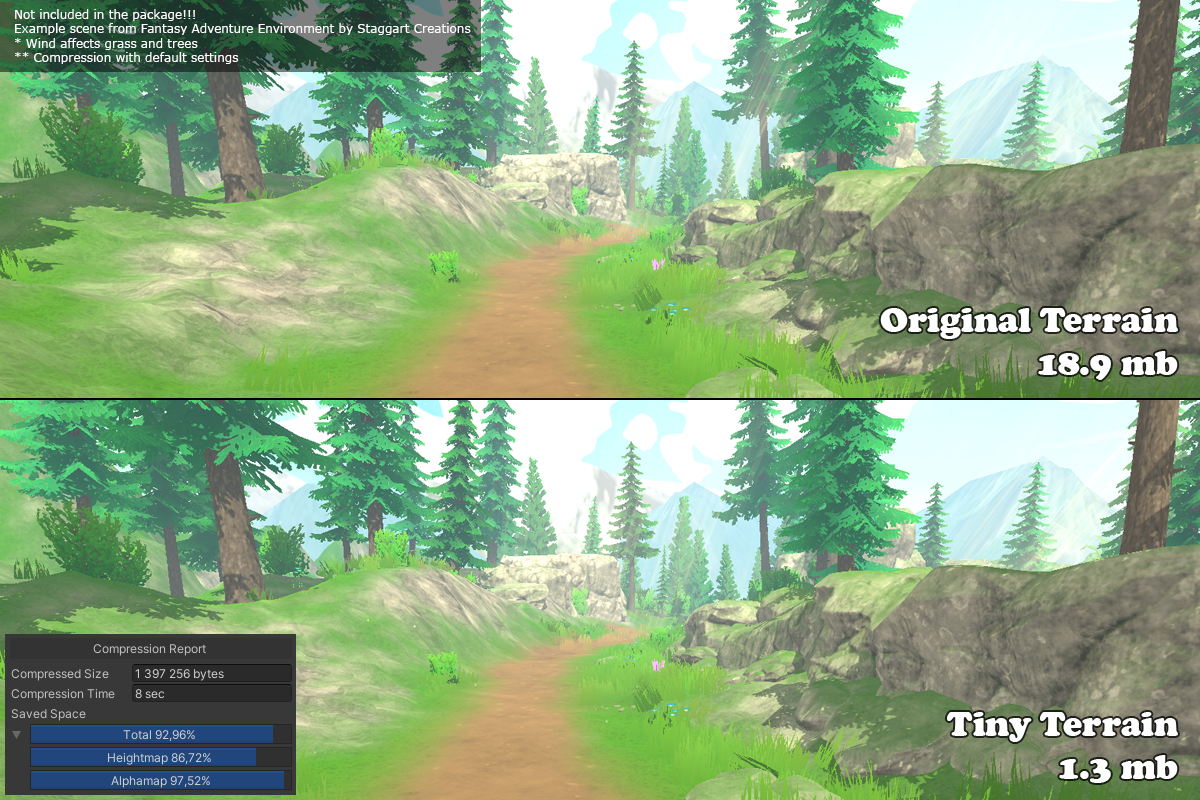
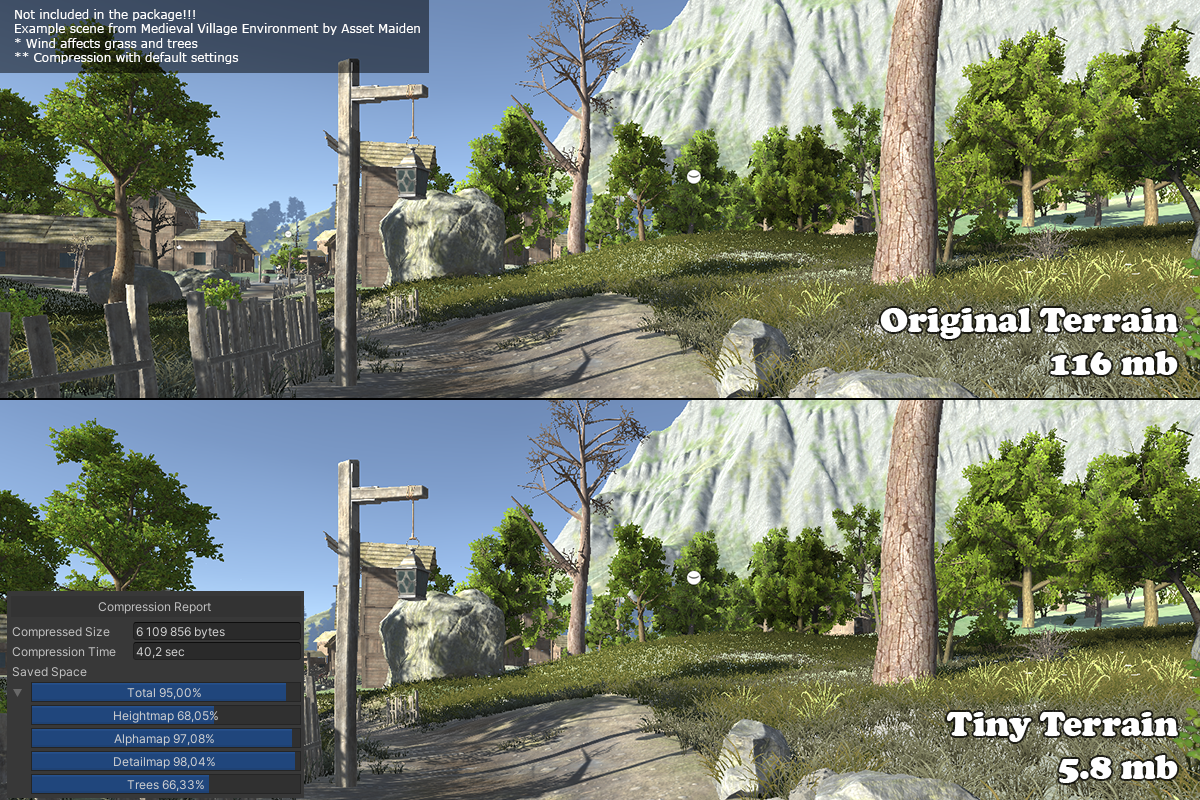
Tiny Terrain is a lossy Terrain Data compression technology for Unity Terrain Engine, which allows you to reduce the size of the data that Terrain takes in the project many times and significantly reduce the size of your application.
You pay a little CPU time and additional memory usage, but save tens and hundreds of megabytes for each Terrain in the project.
Even though the compression is lossy, in most cases you won't see any visual difference at all.
A very high compression ratio is achieved due to the author's data preparation algorithms and then compression using Brotli.
Even if your build or AssetBundle is already compressed using LZ4, LZ4HC or LZMA, Tiny Terrain will be able to reduce its size. Of course the difference in size won't be as huge as with the uncompressed data, but it's still pretty big.
The asset has highly optimized code using direct memory access, which allows for fast compression and decompression, and minimizes additional memory usage. On average, one Terrain is loaded in about 1 second.
Tiny Terrain is not a 3rd party Terrain Engine, and you can use Unity Terrain API and any terrain tools you like, such as Real World Terrain, Gaia, Vegetation Studio, etc.
Using Tiny Terrain is very easy, and anyone can do it, even if it is their first day using Unity.
Just add Tiny Terrain Loader component to Terrain and click Compress.
If you are an advanced user or programmer, Tiny Terrain has events and API that will help you take full control of the loading process.
Features:
- Heightmap. Compression from 2:1 to 10:1;
- Alphamap. Compression from 5:1 to 50:1;
- Detailmap. Compression from 5:1 to 20:1 lossless. Note: Unfortunately, I don't have exact information on how Unity Terrain Engine stores detailmaps, so compression ratio is based on my observations;
- Trees. Compression 3:1;
- Holes. Compression from 1000:1 to 10000:1 lossless;
Platforms:
The asset was tested on PC, Mac, Android, iOS, WebGL.
The rest of the platforms have not been tested, but the asset should also work well on them.
Need to reduce Unity Terrain Data size while keeping your terrain workflow intact? Get Tiny Terrain together with Mesh to Terrain, Terrain Quality Manager, and Tree Tool in the Terrain Essentials Bundle and save $28.99 compared to purchasing the assets separately.